GST Cess Ends February 1, Govt Notifies New Tobacco Tax
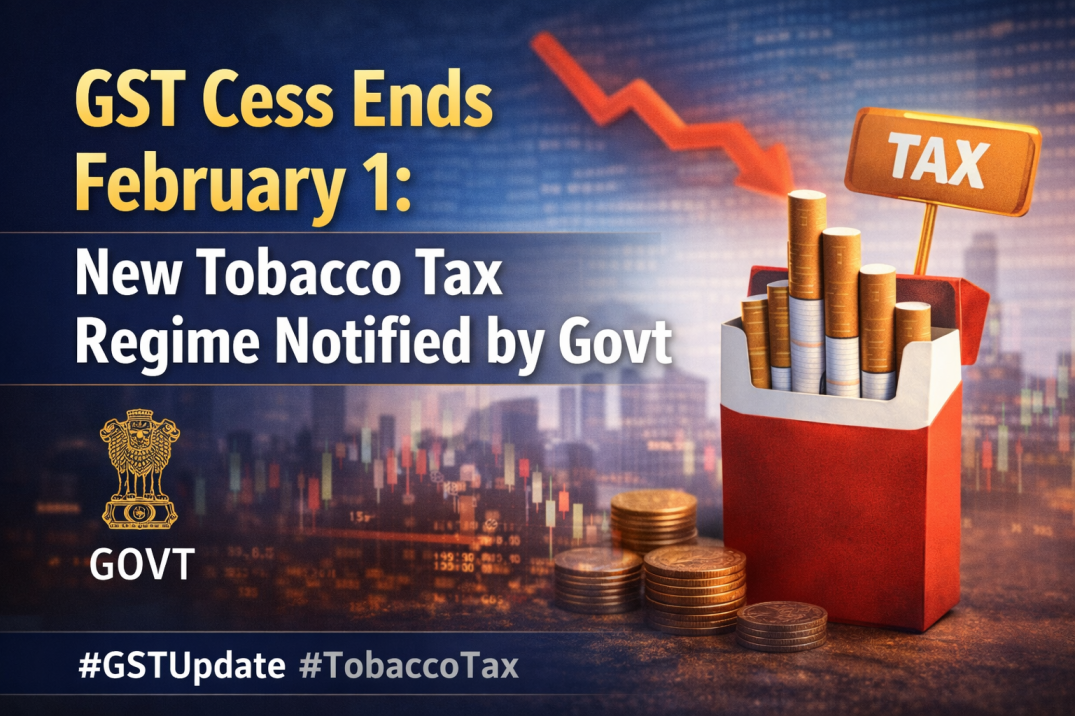
Govt Notifies February 1 as End of GST Compensation Cess, New Tobacco Tax Regime Begins
India just drew a line in the sand: February 1 is now the official last day for the GST compensation cess. That’s a big deal for how the country handles indirect taxes. Alongside this, the government’s rolling out a new way of taxing tobacco—something that’s going to hit manufacturers, buyers, and state finances.
So, what’s the story behind the GST compensation cess?
Back in 2017, when GST first launched, states worried about losing money. The government stepped in and slapped this extra tax—mostly on tobacco, fancy cars, and fizzy drinks—to help states make up for what they lost. It kept things running smoothly while everyone got used to GST.
Now, the government’s pulling the plug on that support.
February 1 isn’t just a date on the calendar—it marks a big change.
The Centre’s made it clear: states need to stand on their own feet, relying more on their own GST collections and other revenue streams.
Basically, the government’s betting on the GST system finally coming into its own, and on people following the rules a bit better.
About the new tobacco tax:
The idea is to keep things simple but effective. Officials say the new structure closes loopholes, pushes for better compliance, and—let’s be honest—tries to get people to smoke less by making tobacco pricier through targeted taxes.
Tobacco companies aren’t thrilled. They’ll have to rethink prices and how they keep up with new rules.
For regular people
This means tobacco products might get more expensive. Manufacturers have new hoops to jump through. Industry watchers expect a little turbulence at first, but in the long run, things should settle down and get clearer for everyone.